
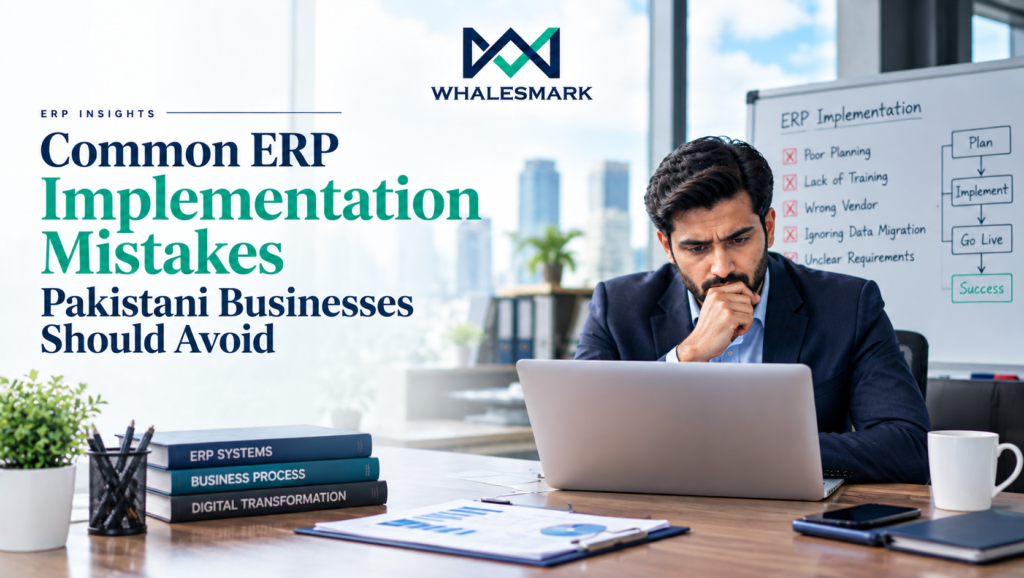
ERP implementation mistakes Pakistan businesses make can turn a promising technology investment into an expensive operational problem. An ERP system is supposed to connect finance, inventory, sales, procurement, human resources, manufacturing, and reporting. But when implementation begins without clear objectives, accurate data, employee involvement, or realistic planning, the software may create more complexity instead of reducing it. For Pakistani businesses operating in increasingly competitive and digitally connected markets, avoiding these mistakes is essential for achieving measurable value from ERP investment.
Table of Contents
Why ERP Implementation Requires More Than Software
ERP implementation isn’t simply a matter of purchasing software and asking employees to start using it. It changes how information moves across departments and how employees complete everyday tasks. A 2025 review of ERP implementation in Pakistani SMEs identified limited financial resources, technical expertise, and resistance to organisational change among important challenges facing businesses.
Pakistan’s wider digital environment is also developing quickly. The Pakistan Economic Survey 2024–25 reported more than 30,000 IT and IT-enabled services companies registered with SECP by March 2025, while ICT service exports rose 23.7% during July–March FY2025. This growth makes effective business technology increasingly important, but companies still need disciplined implementation rather than simply adopting technology because competitors are doing so.
1. Starting Without Proper ERP Planning
One of the most damaging ERP implementation mistakes Pakistan companies can make is starting implementation before defining what the business actually needs.
Management should first document existing processes, identify bottlenecks, establish reporting requirements, and determine which departments need integration. Without this groundwork, companies may purchase unnecessary modules, underestimate implementation requirements, or select a system that doesn’t match their operating model.
Good ERP planning should establish objectives, responsibilities, implementation phases, budget expectations, timelines, and measurable outcomes before configuration begins.
2. Choosing Software Before Understanding Business Processes
Another common mistake is selecting ERP software Pakistan businesses want based primarily on price, popularity, demonstrations, or a competitor’s recommendation.
An ERP system should fit the company’s actual workflows. A manufacturing company, distributor, retailer, construction business, and professional services firm can have very different requirements.
Businesses should therefore compare systems against documented processes rather than changing processes simply to accommodate whichever software was purchased. This approach can reduce unnecessary customisation and make implementation easier to manage.
3. Treating Data Migration as a Minor Task
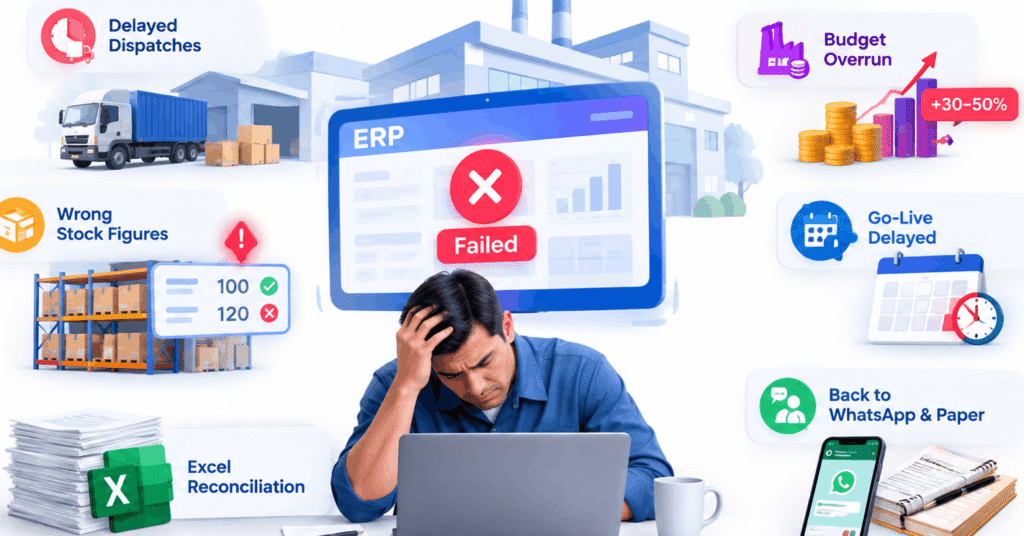
Poor-quality data can undermine an otherwise well-designed ERP system.
Businesses often have years of duplicated customer records, inconsistent product names, outdated supplier information, incomplete financial records, and spreadsheet-based inventory data. Moving everything into a new system without cleaning and validating it first can transfer existing problems into the ERP environment.
Before migration, companies should identify which information is genuinely required, remove duplicates, establish consistent formats, validate important records, and assign responsibility for data accuracy.
4. Ignoring Employees During Implementation
An ERP system ultimately depends on the people using it. Employees who aren’t involved in the process may see the new system as an additional burden rather than a tool that improves their work.
This can create resistance, workarounds, duplicate records, and continued dependence on spreadsheets.
Management should involve representatives from key departments during requirements gathering, testing, training, and rollout. Practical training should use real business scenarios instead of only demonstrating technical features.
5. Underestimating Change Management
Technology doesn’t automatically change organisational behaviour.
A company may implement an ERP successfully from a technical perspective while failing to achieve adoption because employees continue following old approval procedures or maintaining separate records.
This is a major contributor to ERP failure Pakistan businesses should actively guard against. Successful implementation requires clear leadership, communication, defined responsibilities, user training, and post-launch support.
6. Attempting Everything at Once
Trying to implement every module, automate every process, and integrate every department simultaneously can make an ERP project unnecessarily complicated.
A phased approach is often more practical. Businesses can begin with high-priority functions such as finance, inventory, procurement, or sales before expanding into additional modules.
A structured rollout also gives management opportunities to identify problems early and correct them before they affect the entire organisation.

Building a More Reliable ERP Implementation
Avoiding ERP implementation mistakes Pakistan companies commonly encounter starts with treating ERP as a business transformation project rather than an IT purchase.
Businesses should define measurable objectives, document processes, select technology according to requirements, clean data before migration, involve employees, provide continuous training, and monitor performance after launch.
For companies looking for a structured approach to technology, automation, and business transformation, Whalesmark provides digital transformation and technology solutions designed around business requirements rather than technology alone.
Ultimately, successful ERP planning creates the foundation for implementation, while disciplined execution determines whether the investment delivers operational value. Pakistani businesses that approach ERP as a long-term improvement programme can gain better visibility, stronger coordination, more reliable reporting, and greater control over business operations.
Frequently Asked Questions
What is the biggest ERP implementation mistake in Pakistan?
The biggest mistake is starting with software instead of business requirements. Companies should understand their processes, problems, data, users, and objectives before selecting and configuring an ERP system.
How can businesses reduce ERP failure Pakistan risks?
Businesses can reduce ERP failure Pakistan risks through strong leadership, realistic ERP planning, employee involvement, accurate data migration, proper training, phased implementation, and continuous post-launch support.
How should companies select ERP software Pakistan businesses can use effectively?
Companies should evaluate ERP software Pakistan options against their actual workflows, industry requirements, scalability, integration needs, reporting capabilities, support structure, and total implementation cost rather than choosing solely on price.
Is ERP implementation suitable for Pakistani SMEs?
Yes. Modern ERP platforms can be implemented by SMEs when the project is properly scoped. Research on Pakistani SMEs highlights the importance of organisational commitment, employee training, and alignment between business processes and ERP functionality.