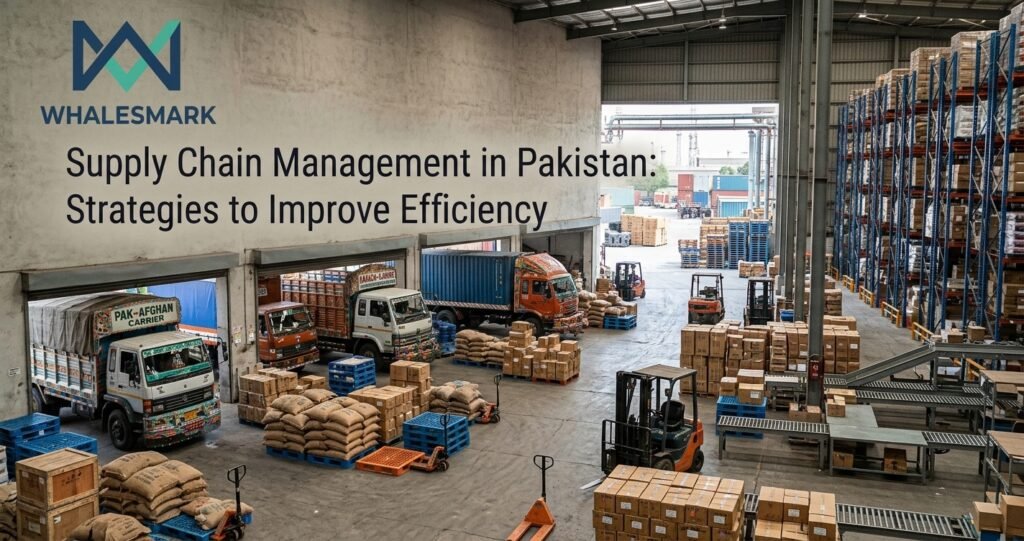
Efficient supply chain management is essential for businesses seeking to control costs, maintain product availability and meet customer expectations. In Pakistan, transportation expenses, currency fluctuations, energy disruptions and changing market conditions can affect procurement, production and distribution activities.
Effective Supply Chain Management in Pakistan helps companies coordinate suppliers, inventory, transportation and distribution while maintaining financial discipline. Businesses that adopt structured Supply Chain Management Strategies can improve operational visibility, manage resources more effectively and prepare for unexpected disruptions.
Table of Contents
Understanding Supply Chain Management in Pakistan
Supply chain management involves coordinating the flow of goods, services, information and financial resources from suppliers to final customers. It includes procurement, production planning, warehousing, inventory control and distribution.
For Pakistani businesses, effective coordination is particularly important when operations depend on imported materials, multiple suppliers or extensive distribution networks.
Supply Chain Management in Pakistan requires businesses to evaluate supplier reliability, purchasing costs, delivery schedules and customer demand. These considerations provide the foundation for effective Supply Chain Optimisation, helping organisations balance operational requirements with available resources.

Major Supply Chain Challenges in Pakistan
Businesses operating in Pakistan may encounter several challenges that affect supply chain performance.
Transportation and Distribution Costs
Fuel price fluctuations, transportation delays and infrastructure limitations can increase distribution expenses and affect delivery schedules. Effective Logistics Management in Pakistan helps companies identify transportation inefficiencies and evaluate alternative arrangements.
Supplier Reliability
Dependence on limited suppliers can expose businesses to material shortages, inconsistent quality and unexpected purchasing delays.
Inventory Management Problems
Inaccurate stock records and poor demand forecasting can result in overstocking or product shortages. Appropriate Inventory Management Solutions help businesses monitor stock availability and purchasing requirements.
Economic Uncertainty
Exchange rate movements and inflation can influence procurement costs, particularly for businesses relying on imported goods and raw materials.
Effective Supply Chain Management Strategies
Businesses can adopt several practical measures to improve supply chain efficiency.
Strengthen Supplier Relationships
Companies should evaluate suppliers according to product quality, delivery performance, pricing and reliability. Maintaining alternative suppliers for critical materials can reduce dependence on individual vendors.
Improve Demand Forecasting
Historical sales information, seasonal trends and customer purchasing patterns can help businesses estimate future demand. Forecasts should be reviewed regularly because market conditions can change.
Establish Performance Indicators
Businesses should monitor supplier delivery performance, procurement costs, inventory turnover and order fulfilment rates.
These Supply Chain Management Strategies help management identify operational weaknesses and make informed purchasing decisions.
Improving Inventory Management and Stock Visibility
Inventory directly affects working capital, operating expenses and customer satisfaction. Excess stock increases storage costs, while insufficient inventory can interrupt production and sales.
Effective Inventory Management Solutions allow businesses to monitor stock movements, identify slow-moving products and establish appropriate reorder levels.
Companies should maintain accurate records of purchases, sales, returns and stock transfers. Regular physical stock counts can help identify discrepancies between recorded and actual inventory.
Integrating Inventory Management Solutions with financial and sales systems also supports better purchasing decisions and more reliable financial reporting.

Strengthening Logistics and Distribution Efficiency
Transportation and distribution are important components of supply chain performance. Businesses need reliable delivery arrangements that balance costs, delivery speed and customer requirements.
Effective Logistics Management in Pakistan involves evaluating transportation providers, planning delivery routes and coordinating warehouse activities.
Companies can consolidate shipments where practical, review delivery schedules and monitor transportation expenses. These measures may reduce unnecessary journeys and improve resource utilisation.
Regularly reviewing Logistics Management in Pakistan also helps businesses identify recurring delivery problems and develop appropriate contingency arrangements.
Using Technology for Supply Chain Optimisation
Digital technology can improve visibility across procurement, inventory and distribution activities. Enterprise Resource Planning (ERP) systems connect operational information, while analytical dashboards help management monitor performance.
Supply Chain Optimisation through technology can support demand forecasting, purchasing decisions, inventory tracking and supplier performance analysis.
Businesses should select software according to their operational requirements, budget and existing systems. Reliable data, employee training and appropriate security controls remain essential for successful implementation.
Technology alone cannot resolve inefficient processes. Companies should combine digital tools with practical Supply Chain Management Strategies to achieve meaningful operational improvements.
Building a More Resilient Supply Chain
Unexpected disruptions can affect material availability, production schedules and customer deliveries. Businesses should identify critical suppliers, establish contingency arrangements and evaluate alternative sourcing options.
Effective Supply Chain Management in Pakistan requires balancing cost efficiency with operational resilience. Maintaining appropriate safety stock and reviewing supplier risks can help organisations prepare for disruptions.
A structured approach to Supply Chain Optimisation also allows management to evaluate operational risks alongside financial considerations.
How Whalesmark Supports Better Business Management
Whalesmark recognises the importance of structured planning, operational efficiency and informed business decisions.
Companies adopting Supply Chain Management Strategies should align procurement, inventory and distribution activities with their wider business objectives.
Understanding Supply Chain Optimisation helps management identify inefficiencies, evaluate resource allocation and establish measurable performance targets.
Conclusion
Effective Supply Chain Management in Pakistan requires reliable suppliers, accurate information, financial planning and coordinated operations.
By strengthening internal processes and adopting appropriate technology, businesses can reduce avoidable expenses, improve product availability and establish a more resilient foundation for sustainable growth.
Frequently Asked Questions
1. What is supply chain management in Pakistan?
Supply Chain Management in Pakistan involves coordinating procurement, production, inventory, transportation and distribution activities to meet business and customer requirements efficiently.
2. How can businesses improve supply chain efficiency?
Businesses can strengthen supplier relationships, improve demand forecasting, monitor performance indicators and implement suitable Supply Chain Management Strategies.
3. Why is inventory management important for supply chains?
Effective Inventory Management Solutions help businesses maintain appropriate stock levels, reduce unnecessary storage expenses and improve product availability.
4. How does logistics management improve business performance?
Effective Logistics Management in Pakistan helps companies coordinate transportation, manage distribution expenses, improve delivery reliability and strengthen customer satisfaction.